
Beam Me Up, Locksmith! The Fascinating Science of Laser-Cut Car Keys
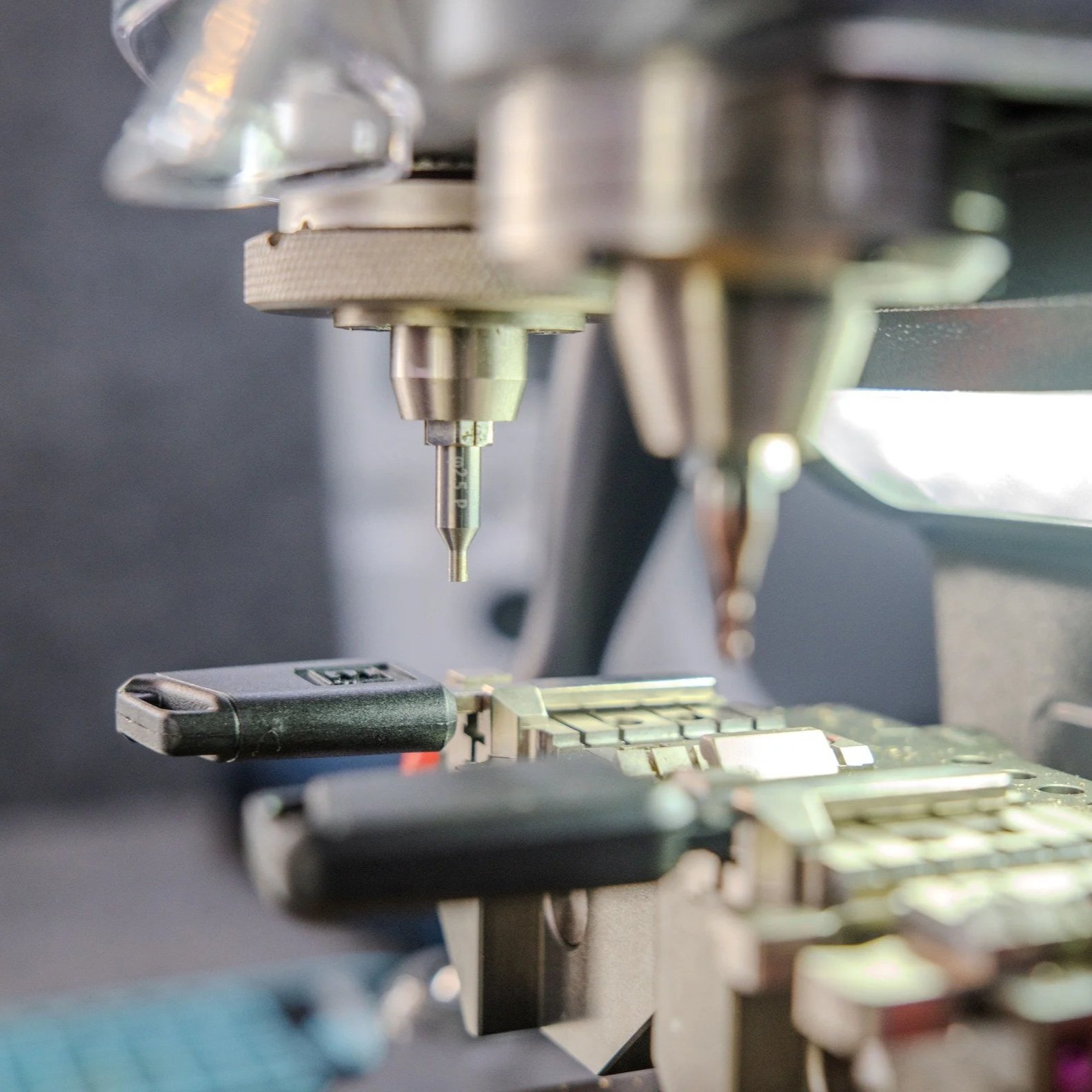
Laser-cut car keys have taken the spotlight, replacing old-school blades with sleek, symmetrical designs and high-security functionality.
Say goodbye to jagged edges and wiggly key insertions. Laser-cut car keys have taken the spotlight, replacing old-school blades with sleek, symmetrical designs and high-security functionality. Unlike the familiar ridge-and-valley cuts of yesteryear, these keys don't just look more sophisticated—they act like it. The difference lies in the depth, the detail, and the daring machines behind the magic.
Laser‑cut key services have changed the game for drivers and locksmiths alike. Instead of using shallow grooves on one side, these keys feature milled indentations on both sides, offering tighter tolerances and increased resistance to tampering. The result? A key that turns clean, feels solid, and keeps unauthorized hands away from the driver's seat.
What Makes A Laser-Cut Key So Special
Laser-cut keys, often called sidewinder keys, are milled with exceptional accuracy. The groove runs down the center or side of the blade and is identical on both faces. That means no more fumbling to figure out the right way to insert it. It fits either way, gliding in like it was born for that ignition.
Because the cuts are deeper and more complex, laser-cut keys demand greater precision from the machines that make them. The milling process uses a spinning router blade, not a simple grinder. It slices through the blank with accuracy that standard key-cutting machines can't replicate. Locksmiths working with laser-cut key services don't just duplicate keys—they engineer them.
Security Built Into The Design
One of the most compelling features of laser-cut keys is their built-in security. Standard keys are fairly easy to duplicate with a basic duplicator. Laser-cut versions don't play that game. Their patterns are unique, detailed, and far less susceptible to traditional duplication methods.
Many laser-cut keys also come equipped with transponder chips embedded in the plastic head. The blade might slide into the ignition just fine, but without the chip signaling the correct code to the car's onboard computer, nothing happens. It's a two-step authentication process your laptop would envy. Professionals working in laser‑cut key services handle both the mechanical cutting and the electronic programming. It's not enough to mill the blade—you've got to sync it with the brain of the car. And no, watching a YouTube tutorial with a paperclip and a key blank isn't going to cut it.
Where Dealerships Fall Short
Car dealerships are known for high prices and long wait times for laser-cut key replacements. Many send the job out anyway—often to a local locksmith with the right tools and expertise. Drivers looking for a faster turnaround and a friendlier face usually head straight to the source.
Professional locksmiths who specialize in laser‑cut key services bring more than convenience. They bring mobile key stations, model-specific expertise, and a deeper understanding of what your vehicle needs. They also don't tack on mystery fees for "electronic reauthorization."
Cutting The Key Is Only The Beginning
Creating a laser-cut key starts with decoding the original. That might mean using a worn-down copy, decoding the lock directly, or referencing the vehicle's VIN. Once the pattern's known, a computer-controlled machine mills the blade into a blank with precise spacing, depth, and shape.
But the key won't work until it's programmed. The locksmith connects a diagnostic tool to the vehicle's OBD port, establishes communication with the ECU, and programs the new transponder chip to play nice with the car's immobilizer system. It's like teaching a new friend the secret handshake. If programming fails, the car won't start. Worse, the system might lock out all keys, triggering a countdown that only resets after a dealer visit. Professionals who handle laser‑cut key services know how to get it right the first time, avoiding a digital meltdown.
Why Some Keys Won't Cut It
Laser-cut keys aren't interchangeable across all makes and models. The blade design, transponder frequency, and even the shape of the plastic head vary widely. Using the wrong blank might result in a key that slides in but never turns—or worse, gets stuck halfway.
Professionals maintain extensive inventories of manufacturer-approved blanks and use software that cross-references year, make, and model. It's not a guessing game—it's a well-orchestrated process. That's why the phrase "I bought it online, just cut it for me" often ends in heartbreak. Mystery blanks may be poorly molded, incompatible, or entirely lacking a functional chip. When a blank key is cheaper than a cup of coffee, there's usually a reason.
Transponder Talk: Your Key's Silent Conversation
Behind the scenes, transponder chips are always whispering. As soon as you turn the key, the ignition antenna sends out a signal asking, "Are you my key?" If the chip answers with the correct response, the car's security system gives a digital nod and allows the engine to fire up.
Laser-cut keys often use rolling-code systems that generate a new code each time the car starts. That keeps hackers from copying the signal. Locksmiths must program the key's chip using factory-grade tools, often requiring pin codes or online authentication through manufacturer portals. Without the right tools and knowledge, programming a transponder is like trying to teach a parrot to speak French overnight. You might get a squawk, but no one's starting the engine.
Laser-Cut Key Duplication: Not Just Copy-Paste
When drivers ask for a spare, laser-cut key duplication gets even more technical. The original might be slightly worn, so duplicating it without adjusting for tolerance could lead to poor performance. Professionals analyze the key, determine its wear level, and sometimes re-code the profile before cutting.
Some jobs call for a laser-cut key from scratch, especially when the original is missing. That requires decoding the door or ignition cylinder—an intricate dance with pick tools and measurement gauges. It's a skill set few possess and even fewer perfect. Once decoded, the locksmith feeds the specs into the cutting machine and creates a key that behaves as if it rolled straight off the dealership floor—minus the markup.
Why Laser-Cut Means Long-Term Reliability
Laser-cut keys aren't just flashy. They're more durable, less prone to breakage, and harder to bend. The symmetrical profile means less fumbling in the dark. And the tighter tolerances translate to smoother insertion, better alignment, and less wear on the ignition over time.
For drivers tired of jiggling their key just right, it's a breath of fresh air. For locksmiths, it's a calling card—precision over guesswork, confidence over compromise.
When Mobile Service Becomes Mission Control
Many professional locksmiths offer mobile laser‑cut key services, arriving at driveways, parking lots, or roadside breakdowns with high-tech equipment in tow. No towing, no sitting in a dealership lobby next to a popcorn machine from 1983.
Mobile setups include power cutters, OBD programmers, chip encoders, and real-time access to manufacturer data. They decode, cut, and program all in one stop. It's basically a command center in a van—minus the espresso bar, though some are working on that.
The Future Looks Sharp
Laser-cut car keys have already become the industry standard for many newer vehicles. As smart security continues to evolve, key tech will keep getting smarter, more compact, and more tightly integrated with your car's digital ecosystem.
Professionals who work in laser‑cut key services don't just ride the wave—they help steer it. They know when to use the older tools and when to let the high-end machines hum to life. They work in microns, think in encryption, and make security feel simple, even when it's anything but. Laser-cut keys might not beam anyone to another galaxy, but they do represent the future of secure driving. They're precise, they're protective, and when cut by a seasoned pro, they're practically poetry in motion.
Get prompt and professional emergency locksmith services, car key replacement & programming, and master key system & high-security lock solutions in Pittsburgh with Lockstar Locksmith. We are available 24/7 and use top-quality materials and advanced techniques to guarantee outstanding workmanship. Get in touch with us to book a service.
