
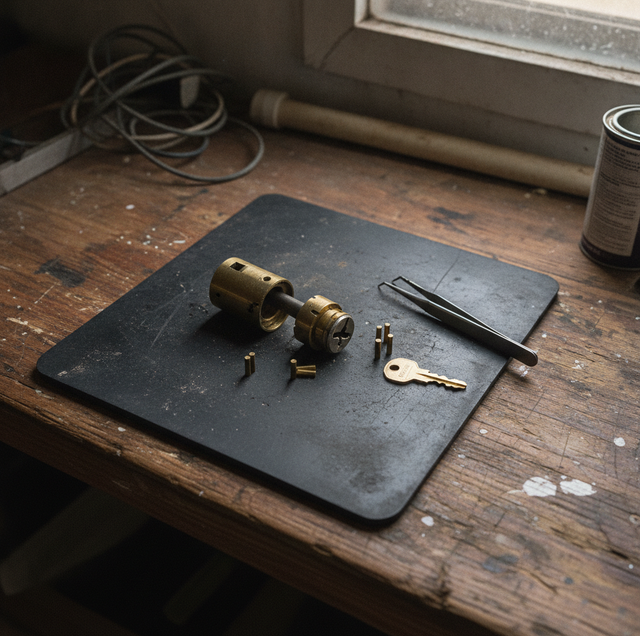
The sale closed, the keys are in your hand, and you are standing in your new home surrounded by boxes. Somewhere on that keyring is the key to your front door, and here is the uncomfortable question nobody at the closing table brings up: Who else has a copy of it? The previous owners, sure, but also their kids, a neighbor who watered the plants, a cleaner, a contractor, an agent, and anyone they ever handed a spare to. You have no way of knowing, and that is exactly why securing the locks is one of the first things to do in a new home.
The good news is that you usually do not have to replace the locks to solve this. Rekeying handles it, and understanding the difference tells you which one you actually need.
Why New Locks Matter on Day One
The locks on your new house very likely work fine, which is why it is easy to skip this step. But working fine is not the same as being secure. Every key that was ever cut for those locks still opens them, and you cannot account for all of them, no matter how trustworthy the previous owners seemed. The keys were out of their control long ago, handed to helpers, and forgotten in drawers. Until you change what those keys fit, your new home is protected by locks that an unknown number of strangers can open. Securing them on day one closes that gap and provides inexpensive peace of mind for the single most important thing you just bought.
Rekey vs. Replace: The Key Difference
There are two ways to make the old keys stop working, and they solve the same problem differently.
Rekeying changes the internal pins and tumblers inside your existing lock so that the old keys no longer fit, and a new key is made to match the new arrangement. The hardware stays; only the inner workings change. It is faster and less expensive than replacing; it keeps the locks you already have, and it makes every old key useless in one step. For the common goal of ensuring nobody else's key works, rekeying is usually all you need.
Replacing swaps out the entire lock hardware for new units. You do this when the locks are old, worn, or damaged, when you want to upgrade to a higher security grade or a smart lock, or when the existing hardware is a mismatched jumble you would rather standardize. Replacing costs more because you are buying new hardware, but it is the right call when the goal is more than just changing who has a key.
| Situation | Rekey | Replace |
|---|---|---|
| Old keys are the only concern | Yes, ideal | Overkill |
| Locks are worn, damaged, or old | Possible | Better |
| Want to upgrade security or go smart | No | Yes |
| Mismatched locks you want to standardize | Sometimes | Yes |
| Want every door on one key | Yes, easy | Yes |
A Handy Bonus: One Key for Everything
Rekeying has a practical perk beyond security. If your new home came with different keys for the front door, back door, and garage entry, a locksmith can rekey them all to a single key while making the old ones useless. Instead of fumbling through a ring to find which key fits which door, you carry one. It is a small convenience that people appreciate every day, and since the locksmith is already rekeying for security, it costs little to standardize at the same time.
Why the Local Climate Is Worth a Look Too
While you are securing the locks, it is a good moment to have their condition checked, because temperature swings are hard on locks over time. Moisture works into cylinders and expands or freezes, worn tumblers stick, and exterior locks and car ignitions take a beating through the seasons. If a lock on your new home is already stiff, gritty, or balky, rekeying is the right time to service or replace it rather than rekey a lock that is on its way out. Handling security and condition together means you start in the new home with locks that are both yours alone and working smoothly.
Frequently Asked Questions
It is strongly recommended, and in most homes, rekeying handles it without buying new hardware. You cannot know how many copies of the old keys exist or who holds them, from past owners to babysitters, dog walkers, and the contractor who kept a spare. A typical single-family home has three to five keyed exterior openings (front, back, side, garage entry, sometimes a shed), and a locksmith can put all of them on one fresh key in a single visit. Until you change what those keys fit, an unknown number of people can still walk in.
Rekeying re-pins the cylinder you already have to a brand-new key, so it wins whenever the goal is simply making old keys useless. Replacing means installing a whole new lock body, and it becomes the right call in specific cases: the deadbolt is loose in the door, or the latch drags, the finish is corroded, the lock is an older builder-grade unit you want to move past, or you are upgrading to a smart deadbolt or keypad entry. A useful rule of thumb is that if the hardware is sound and turns smoothly, rekey it; if it is failing mechanically or you want a feature it lacks, replace it.
Inside the cylinder sits a row of spring-loaded pin stacks, each split at a height that matches the cuts on the current key. To rekey, the locksmith pulls the plug and swaps in a different set of bottom pins so the split lines up with a new key pattern instead. The old key can no longer raise every stack to the shear line, so it stops turning, while your new key does. It is the same physical lock and the same springs and housing; only the small bottom pins change. On many common cylinders, the same body can be rekeyed repeatedly over its life, which is why a lock rarely needs replacing just to change the key.
Yes, as long as the locks share a compatible keyway, which most builder-installed hardware on one house does. The locksmith rekeys each cylinder to the same new cuts so a single key runs the whole exterior, even if the doors arrived with three or four different keys. If one opening uses an odd brand or a different keyway that will not accept the common cuts, that lock can be swapped for a matching one, so everything still lands on one key. Doing this during the move-in rekey adds little to the visit since the cylinders are already open.
Rekeying is a fast job, and a mobile locksmith can typically handle a home's exterior locks in a single visit, often the same day you call. Because it is quicker and cheaper than replacing hardware, it is easy to schedule right around moving in, so your home is secured on your terms without much disruption to the move.
Even new-looking locks should be rekeyed because appearance says nothing about how many keys they have. A shiny lock can still have several copies of its key floating around from the previous owner. Unless you installed the lock yourself and control every key, rekeying is the only way to be sure that only your keys open your doors.
Make the Home Yours Alone
Moving into a new home means the locks work, but not that they are secure, because you cannot account for every key ever cut for them. Rekeying is the fast, affordable way to make all those old keys useless while keeping your existing hardware, and it lets you put every door on a single key at once. Replace them instead when the locks are worn, or you want an upgrade. Either way, securing the locks on day one turns the house you bought into a home only you can open.
Just moved in? We can rekey your locks the same day so that only your keys work, and put all doors on one key. Lock Star Locksmith serves Pittsburgh, Bethel Park, Penn Hills, and the surrounding area. Call (412) 376-6706.
