
Deadbolt Grades Explained: What ANSI Grade 1, 2, 3 Mean
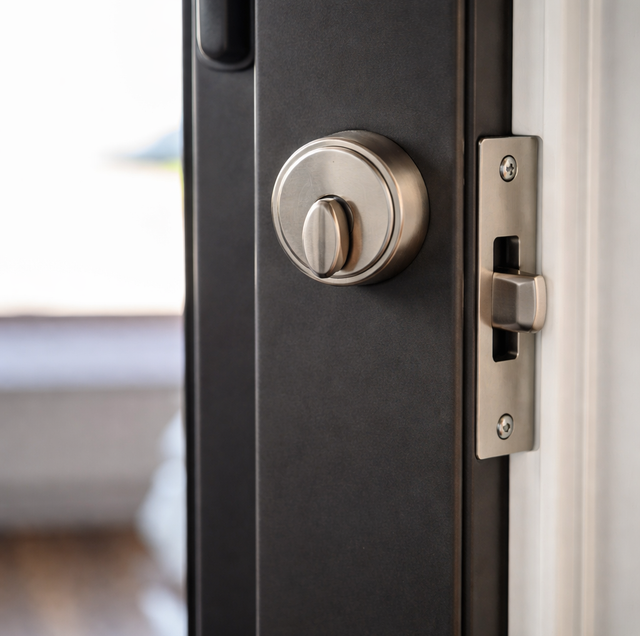
Quick Answer: ANSI/BHMA grades rate a deadbolt on two things: how many times it can operate before it wears out, and how much force and impact it survives at the strike. Grade 1 is the strongest (roughly 250,000 cycles and the highest impact resistance), Grade 2 sits in the middle, and Grade 3 is builder-basic. For an exterior entry door, look for Grade 1 or a strong Grade 2. The grade rates the lock only, not the door frame it is bolted into, which is often the part that actually fails.
What the Grade on a Deadbolt Package Actually Measures
Two deadbolts can look identical on the shelf and behave completely differently under a shoulder or a pry bar. The number that separates them is the ANSI/BHMA grade, a rating set by the Builders Hardware Manufacturers Association and tested to a published standard. It is stamped on the box or the spec sheet, and once you know what it means, you can assess a lock's security without touching it.
The grade is not a marketing badge. It is the result of a lab running the lock through two kinds of abuse. The first is cycle testing: the lock is thrown open and closed over and over by a machine until it wears out, which stands in for years of daily use. The second is force and impact testing: the bolt and its housing are hit and loaded to see how much they take before they give. A higher grade means the lock survived more cycles and more force.
The three grades in plain terms
- Grade 1 is the highest residential rating and the one you want on a main entry door. It withstands the most operating cycles (on the order of 250,000) and the highest strike and impact loads.
- Grade 2 is a solid middle tier. It handles a good number of cycles and a fair amount of force, and a strong Grade 2 is acceptable on many exterior doors.
- Grade 3 is the minimum that meets the standard at all. It is the builder-basic lock that often ships on new construction to hit a price point. It works, but it is the easiest of the three to defeat with force.
Reading the grade first, before you look at finish or brand, is the fastest way to tell a security lock from a lock that merely closes a door.
Cycles Versus Force: The Two Tests Behind the Number
It helps to keep the two halves of the test apart, because they answer different questions.
Cycle count answers "will it wear out." A machine turns the bolt in and out tens or hundreds of thousands of times. A lock that survives more cycles has better internal metal and tighter tolerances, so it keeps turning smoothly for years instead of getting sloppy and sticky. This is why a well-graded lock still feels crisp long after a cheap one has gone gritty.
Force and impact answer "will it hold." Here the bolt is extended, and the assembly is struck and loaded, imitating a kick or a body-check at the door. A Grade 1 lock keeps the bolt seated under loads that would let a Grade 3 bolt jump free or bend. If your concern is a forced entry rather than daily wear, this is the half of the rating that matters most.
A single number rolls both results together, so a Grade 1 deadbolt is telling you it passed the hardest version of each test.
The Lock Is Only As Strong As the Frame Around It
A high grade buys you very little if the wood around the lock gives way first. In a large share of forced entries, the deadbolt itself never breaks. Instead, the strike plate tears out of the door jamb, and the whole bolt swings in still locked, taking a splinter of frame with it. The rating covers the lock. It does not cover the two-by-four the strike plate is screwed to.
That failure has a name and a fix. A standard strike plate is often held by two short screws that bite only into the thin jamb trim, maybe three-quarters of an inch of soft pine. Under a kick, those screws pull straight out.
Reinforcing the weak point
- Long screws into the framing: Swapping the short screws for three-inch screws lets them pass through the jamb and bite into the wall stud behind it. Now a kick has to move framing lumber, not trim.
- A reinforced or box strike: A heavier strike plate, sometimes a wraparound box strike that cups the bolt, spreads the load across more wood and metal instead of a single thin plate.
- A solid-core or metal door: A hollow door can fail around a perfect lock. A solid-core wood or metal door gives the bolt something worth holding onto.
Upgrading a Grade 3 lock to Grade 1 while leaving two short screws in soft trim is like fitting a bank vault door to a tent. Fix the frame and the strike, and even a mid-grade lock gets meaningfully harder to force.
The biggest low-cost gain is at the frame. Swap the short strike-plate screws for three-inch screws that pass through the jamb and bite into the wall stud behind it, so a kick has to move framing lumber instead of thin trim. A reinforced or box strike spreads the load further still.
Throw Length, Cylinders, and the Details That Decide Security
Beyond the grade, a few specific features change how a deadbolt behaves at the door.
Throw length is how far the bolt extends when you lock it. A full one-inch throw is the target for an exterior deadbolt. A long bolt reaches deep into the strike and the frame, so the door has to be spread much farther before the bolt can clear its pocket and pop loose. A short, half-thrown bolt barely holds.
Single versus double cylinder is a real decision, not a preference. A single-cylinder deadbolt takes a key outside and a thumbturn inside, so anyone inside can leave fast. A double-cylinder deadbolt needs a key on both sides, which stops an intruder from reaching through a broken sidelight window to turn the bolt by hand. The tradeoff is a safety one. In a fire or emergency, a double-cylinder lock can trap people inside because they need a key to get out, and a key is exactly what no one can find in smoke and panic. If a double cylinder is used at all, the interior key must stay in reach at all times, and many households are better served keeping the key out entirely and using a single cylinder with laminated glass near the lock.
A double-cylinder deadbolt needs a key on both sides, so in a fire or emergency it can trap people inside when a key is not at hand in smoke and panic. If a double cylinder is used at all, keep the interior key within reach at all times, or use a single cylinder with laminated glass near the lock instead.
Bump and pick resistance lives inside the cylinder, in the pins that read the key. Manipulation techniques can defeat basic cylinders. Higher-security cylinders add features like specially shaped pins, a second locking mechanism, or restricted keyways that resist those methods and make keys harder to copy without authorization. You do not need to know how any attack works to benefit from the upgrade. You only need to ask for a higher-security cylinder when the door protects something worth that step.
Matching the Grade to the Door
Not every door needs the top of the line, and spending Grade 1 money on an interior closet is wasted.
A simple way to sort it
- Exterior entry doors (front, back, side, garage-to-house) carry the real risk and deserve a Grade 1 or a strong Grade 2 deadbolt with a full one-inch throw, on a solid door, with a reinforced strike and long screws.
- Interior doors that lock for privacy rather than security, such as a home office or a storage room, are fine with a lower grade, because the threat there is convenience, not force.
- A door with glass near the lock raises the question of reach-through and, with it, the double-cylinder debate and the safety tradeoff that comes with it.
Getting all of this right, matching grade to door, setting the throw, reinforcing the frame, and choosing between cylinder types without creating an egress hazard, is where a licensed locksmith earns the visit. A professional can measure your existing prep, tell you what grade you actually have, and install the upgrade so the lock and the frame work as one piece rather than a strong lock in a weak wall.
Frequently Asked Questions
The grade is usually on the original packaging or the spec sheet, not the lock itself, so an installed deadbolt rarely shows it. If the box is long gone, look up the model number stamped inside the lock or on the cylinder against the manufacturer's catalog, or have a locksmith identify it by sight. As a rough field clue, a lock that feels heavy and turns crisply is more likely to be well graded than one that feels hollow and rattles.
Yes, the mechanical part of an electronic deadbolt is graded on the same cycle and force tests, so a smart lock can still be Grade 1, 2, or 3. The electronics are rated separately for things like battery life and weather sealing. A smart lock with a low mechanical grade is still easy to force no matter how good the app is, so check the ANSI grade of the bolt, not just the connectivity features.
Not directly. The grade measures durability and force resistance, while pick and bump resistance lives in the cylinder and the pin design, which the standard rates on a separate scale. A lock can earn a high force rating and still use a basic cylinder. If manipulation resistance matters to you, ask specifically for a high-security cylinder rather than assuming a strong grade covers it.
Often yes. The single biggest gain is at the frame: fit a reinforced strike plate and three-inch screws that reach the stud, which costs little and stops the most common failure. You can also add a strike-side door reinforcer or a wraparound jamb plate. These upgrades harden the weak point without touching the lock, and they help even a modest deadbolt hold under a kick.
Local requirements vary and are a matter for the property owner to confirm, but as a practical baseline, many landlords standardize on a Grade 2 deadbolt with a one-inch throw on exterior unit doors, because it balances tenant safety against turnover cost. Rekeying between tenants matters as much as the grade itself, since a strong lock keyed to a departed tenant's copy is not secure at all.
Usually. Residential deadbolts follow standard bore sizes: a 2-1/8 inch cross-bore for the lock body and a 1-inch edge bore for the bolt, plus standard backset spacing of 2-3/8 or 2-3/4 inches from the edge. A Grade 1 lock in that standard prep drops into the same holes. The exception is a non-standard or older door, where the backset or bore may not match, and a locksmith may need to adjust the prep.
Ask us to grade the locks on your exterior doors — you will know exactly where you stand before you spend a dollar on an upgrade. Lock Star Locksmith serves Pittsburgh, Bethel Park, and Mt. Lebanon. Call (412) 376-6706.
