
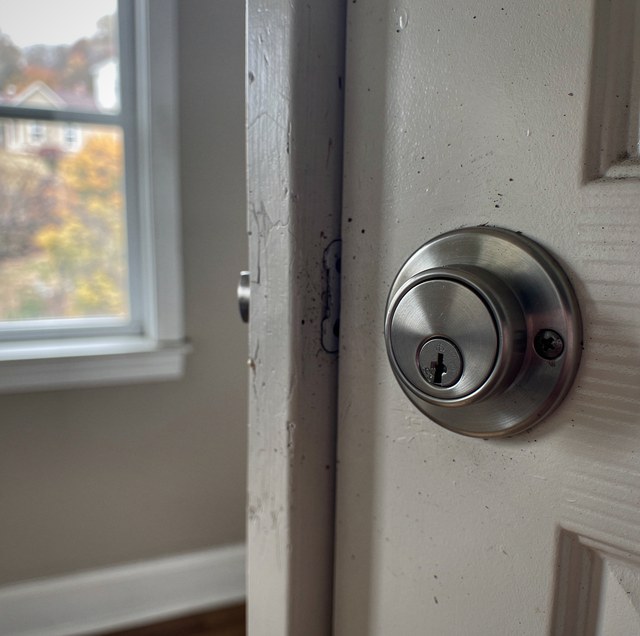
A lock that has been tampered with does not announce itself with anything dramatic. There is no broken glass, no door hanging open, nothing you would catch from across the room. What tampering leaves behind is smaller: a scratch at the edge of the keyway, a cylinder that spins differently than it did last week, a strike plate that sits a hair off where it always has. Wear leaves marks, too, and at a glance the two can look nearly identical. The difference matters, because one calls for a locksmith and a decision about rekeying or replacing, and the other calls for a locksmith and the police.
Each mark sorts into tampering or wear by how fast it appeared and where it sits:
| What You Notice | Tampering or Ordinary Wear? | What to Do |
|---|---|---|
| Fresh scratches around the keyway | Bright, concentrated scratches at the opening can point to a tool worked into the keyway, especially if they appeared recently; wear scratches spread out and dull over years, not weeks. | Photograph the marks before you touch the lock again. |
| A key that suddenly turns rough | Roughness that arrives suddenly together with fresh marks at the keyway can point to tampering; sudden roughness with no marks can also be a bent key, grit, or a shifted door; a slow build-up over time is wear. | Note when you first felt the difference. |
| A loose or spinning cylinder | Tampering can knock a cylinder out of true in one attempt; wear loosens it gradually, cycle by cycle, over years. | Stop turning it and use a different door. |
| Pry marks on the door edge or frame | A fresh gouge, or a tool-width dent, cut into the wood or metal, points to force; ordinary use scuffs where the bolt rubs but does not leave pry-shaped gouges. | Leave the area alone and check the rest of the frame for matching marks. |
| A strike plate that is bent or has shifted | A bent plate can indicate force; a plate that has only shifted slightly can also be due to a settling frame. | Compare the screw holes to see if they have been pulled or enlarged. |
| A lock that no longer latches | Failure right after fresh marks appear points to forcing; failure with no marks and a slow decline points to wear. | Block or secure the door another way until it is checked. |
| Keys that no longer work | Keys failing right after other marks show up point to the cylinder being worked on; keys that gradually got harder to turn point to wear. | Keep all the keys for that lock together for the locksmith to test. |
How Tampering Leaves Marks
Someone working a lock without the right key does it one of a few ways, and you don't need to understand the technique to read what it leaves behind. Working a tool inside the keyway concentrates fine scratches right at the keyway's opening rather than deeper in the cylinder, since that's where the tool makes repeated contact. A sharp-impact attempt sends shock through the whole cylinder, and even a failed attempt can leave the plug seated slightly looser or turning with a different feel than before. Plain force against the bolt, the strike plate, or the door frame leaves the most visible evidence of the three: a gouge in the wood, a splintered jamb, a strike plate torn loose from its screws, or, when the goal was destroying the cylinder outright, one or more small, round holes near the keyway rather than a scratch. You don't need to identify which method was used. Recognizing that a mark exists, where it sits, and that it appeared suddenly rather than building up is what matters.
Telling Wear from Tampering
Age adds a wrinkle to that judgment. Older homes can still be running the locks they were built with, so a rough patch there can be decades of ordinary turning; the locks in a newer house have fewer cycles on them, so the same roughness there is harder to explain as wear. Age narrows the question without settling it: an older home's lock can still be targeted, and a newer home's lock can still develop play if it came with a lower-grade builder cylinder. What separates the two is speed and pattern: wear takes months or years to build, spreads evenly across the entire travel of the key rather than at a single point, and polishes the metal it touches rather than gouging it. Tampering appears between one use of the lock and the next, sits at a single point of contact, the keyway's opening, the face of the cylinder, the edge of the strike, and can leave a mark you can point a camera at.
Evidence Around the Door and Frame
A lock is only one part of what holds a door shut, and someone testing an entry point puts pressure on the weakest part of that whole system, not just the cylinder. Hinges on the opposite side of the door can back out or show pry marks from an attempt to lever the door away from its frame rather than fight the lock directly. A door slab that's split or chipped near the strike, especially wood that looks freshly exposed rather than weathered, is evidence even when the lock itself shows nothing. Checking the lock alone, while missing a compromised frame or a loose hinge, leaves half the picture unexamined.
What to Do Right Away
The immediate steps matter more than diagnosing exactly what happened. Don't scrub, oil, or otherwise clean any mark you find; that can remove the evidence a locksmith or the police would want to see. Photograph the marks from a few angles and in good light before you touch the hardware again.
When you photograph a mark, set a coin or a ruler next to it before you shoot. That scale reference is worth having if the marks are ever compared side by side later.
Use a different door if the affected one won't lock reliably, rather than forcing the questionable lock closed and hoping it holds. If what you're looking at goes beyond the lock itself- a torn frame, a splintered jamb, a door that clearly took force- and you have any reason to think someone could still be on the property, stop there and don't go any further on your own.
If you find pry marks or a door that won't latch and think someone forced their way in, don't go inside to check. Leave the property, call the police, and let them clear the space first.
Rekey or Replace Afterward
Deciding between a rekey and a full replacement afterward follows the same logic as any other lock decision: sound hardware gets rekeyed and damaged hardware gets replaced. What's different here is what counts as sound. An attempt that didn't succeed can still flex a plug, chip a pin, or crack a housing without the lock failing outright right away, so a cylinder that still turns fine after an attempt is worth more scrutiny than a cylinder that's simply old, since damage from force or manipulation doesn't always show up the day it happens. If one door on your property was targeted, treat every entry point on the same side or level as suspect, not just the one with visible marks, since an attempt on one lock can affect others. And whether you replace the affected lock or simply rekey it, keep the photographs and the rough timeline of when you first noticed something wrong; if anything else happens later, that record is what ties the two events together.
How a Locksmith Confirms Tampering
A locksmith looking at a lock you suspect was tampered with checks more than whether the key still turns. They'll pull the cylinder to look at the pins and springs directly rather than judging by feel alone, since an attempt can leave damage that isn't obvious from outside the door. They'll inspect the keyway itself under angled light for the fine marks that don't show up in flat lighting, and look at the strike plate, frame, and hinges as part of the same inspection rather than the lock in isolation. If the assessment points toward tampering rather than wear, they can also walk you through whether a higher-security cylinder makes sense for that specific door going forward, given what was just tried against it.
Frequently Asked Questions
Not necessarily. Some deadbolts use a cylinder that comes out and goes back in as a separate part, so if the pins and plug are damaged, a locksmith can swap just that piece and leave the bolt, the housing, and the strike in place. A cylinder swap only makes sense when the rest of the hardware still tests out sound; if the bolt itself is bent or the housing is cracked, the fix moves from a cylinder swap to full replacement.
Yes. Along with any marks on the housing, a smart lock with an activity log can record failed code entries, motor faults, and low-battery events in its app, so a run of failed codes around the same time as a physical mark is evidence a mechanical lock can't produce on its own. That log doesn't replace checking the hardware, since a smart deadbolt with a key cylinder as a backup can still be attacked at the key cylinder.
Call the police first if you have any reason to think someone forced their way in and might still be on the property; a locksmith's assessment can wait until the property is confirmed clear. If nothing suggests an active break-in, either order works, but keep a photo of the marks from before anyone touches the hardware, since some insurance policies require documentation of forced entry, including a police report number, before they will process a claim tied to the damage.
It can, though the pattern is different up close. Cold can make a lock stiff enough that forcing a key scuffs the face of the keyway, but that scuffing does not leave pry-shaped gouges in the frame or strike, and it doesn't sit at one sharp point the way a forced attempt does.
Yes, if it is on the same side of the house. A slider's latch sits in the edge of the moving panel, so an attempt can leave pry marks along that edge and the frame beside it, or a latch hook that no longer lines up with its keeper. A panel lifted out of its track can leave scuffs along the top channel. Photograph what you find before the door is operated again.
Yes, if those locks share a key. Doors set up as keyed-alike, so a single key opens more than one lock, share whatever risk hits the affected cylinder, so a confirmed attempt is a reason to rekey every lock on that same key even if only one shows marks. Locks that use separate keys and haven't been touched don't need the same response, since the affected cylinder is a physical part.
Set up a same-day tampering inspection for any lock or frame with fresh marks — rekeying or replacement follows only where the marks show damage. Lock Star Locksmith serves Pittsburgh, Bethel Park, and Penn Hills. Call (412) 376-6706.