
Why Your Key Gets Stuck in the Lock, and What It Means
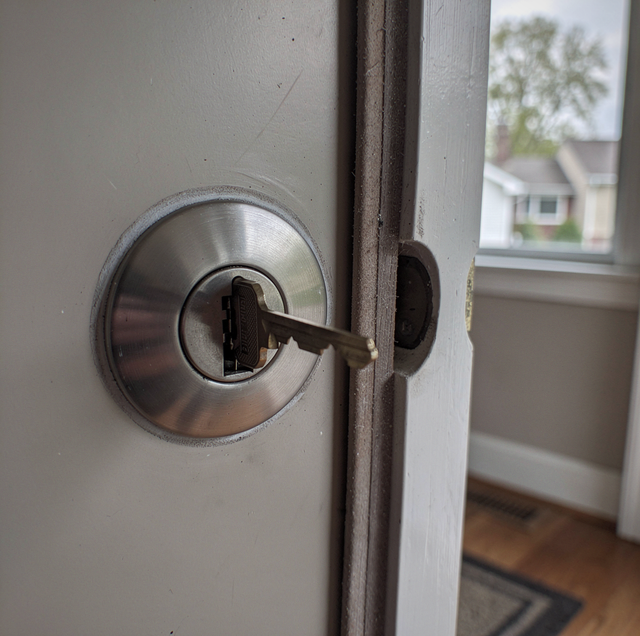
Quick Answer: A key usually sticks for one of five reasons: the key itself is worn or slightly bent, the cylinder is dirty or dried out inside, the pins or springs inside the lock are worn, the door has shifted so the latch no longer lines up with the strike plate, or temperature and humidity swings have changed how tightly everything fits. Cleaning and light lubrication solve some of these. A worn cylinder or a misaligned door usually requires a locksmith to inspect the hardware directly.
A lock that sticks didn't fail overnight. Something changed, either in the key, inside the cylinder, or in the door itself, and the change happened slowly enough that you only noticed once turning the key started taking real effort. A key that used to slide in and turn in one motion now catches partway, needs to be wiggled, or only turns after you push, pull, or lift the door while turning. None of that is normal, and none of it fixes itself. It's a sign that something inside the lock has worn down, gotten dirty, or shifted out of position.
What a Sticking Key Usually Means
A standard pin tumbler lock, the type on most front and interior doors, works because a set of small spring-loaded pins line up at exactly the right height when the correct key is inserted. That alignment lets the cylinder rotate freely. If the key is worn, if the pins are gritty or corroded, or if the cylinder itself is slightly out of true due to a door that no longer hangs square, that alignment gets thrown off just enough to create resistance. You feel that resistance as a key that sticks, catches, or needs extra force to turn.
The mechanism is small, and small amounts of wear or debris make a noticeable difference. A gap measured in fractions of a millimeter is enough to turn a smooth turn into a fight.
A Worn or Bent Key Is Often the Simplest Explanation
Keys wear down every time they're used. The metal teeth that ride against the pins gradually round off, especially on a key that's been duplicated from a duplicate, since each copy can introduce small inaccuracies that get passed along to the next one. A worn key no longer pushes the pins to the exact height the lock requires, so it catches where alignment falls short.
A bent key causes a similar problem in a different way. Keys get bent from being carried loose in a pocket with coins and other metal, from being used as a makeshift pry tool, or from being forced in a lock that was already sticking. Even a slight bend changes how the key sits inside the cylinder and where it contacts the pins.
Compare your problem key to a spare, if you have one. If the spare turns easily and the worn key doesn't, the key is the issue, not the lock, and a fresh cut usually resolves it.
Dirt, Dust, and Old Lubricant Clog the Cylinder
Exterior locks sit exposed to dust, pollen, and airborne grit all year, and every bit of it that finds its way into the keyway settles around the pins. Oil-based lubricant makes this worse over time, since it becomes tacky with age and traps dust; old graphite can cake into the same kind of clogged layer. What started as a helpful coating becomes a gummy layer that slows the pins and makes the key feel gritty as it goes in and out.
This is one of the few causes you can often address yourself. A can of dry PTFE-based lock lubricant, applied directly into the keyway with the key worked in and out a few times, loosens some of the built-up grime without leaving the sticky residue that oil-based products do. Avoid petroleum-based lubricants like household oil, which attract more dust and tend to make the problem worse within a few months.
Worn Springs and Pins Cause the Cylinder to Bind
Inside every pin tumbler cylinder, small springs push the pins down against the key. Those springs weaken with age and repeated use, and the pins themselves wear at the point where they contact the key's teeth. A cylinder with tired springs or worn pins doesn't reset cleanly after each turn, so the key catches on the way in, the way out, or partway through the turn.
This kind of wear tends to show up gradually across months or years of daily use, and it affects the lock that gets used most, usually the front or back door. Once pins and springs wear unevenly, cleaning and lubricating help less than they did earlier, because the problem isn't debris anymore. It's the internal parts themselves no longer moving the way they should. A locksmith can service or rebuild the cylinder in many cases, though a cylinder with significant wear is often best replaced outright.
When the Door Shifts, the Latch Stops Lining up with the Strike Plate
Sometimes the lock itself is fine, and the door is the problem. Doors shift over time as a house settles, as hinges loosen, or as humidity swells or shrinks the wood in the frame. When the door shifts even slightly, the latch and deadbolt no longer line up cleanly with the holes in the strike plate mounted on the frame. That misalignment puts sideways pressure on the bolt exactly when you're trying to turn the key, and your key ends up fighting the door, not just the lock.
You can usually tell this is the cause if the key turns easily when the door is open but sticks or binds when the door is closed, and you're turning the key under pressure from the frame. Watching where the latch or bolt contacts the strike plate as you slowly close the door will often reveal a visible offset. A locksmith can adjust or replace the strike plate, and in some cases the door itself needs to be rehung or the hinges adjusted, which is carpentry work rather than a lock repair.
Temperature Swings Can Make a Marginal Lock Worse
Metal expands and contracts with temperature, and wood doors and frames respond to humidity by swelling or shrinking. A lock that's borderline, already carrying some wear or a little debris, can go from working fine to sticking noticeably during a stretch of very cold, very hot, or very humid weather, simply because the tolerances inside the cylinder and around the door frame tighten up. This isn't unique to any one climate. Any region with meaningful seasonal swings puts extra strain on a lock that was already nearing attention.
If your key only sticks during certain weeks of the year and turns fine the rest of the time, that pattern suggests a marginal lock, not one failing outright. It's worth having checked before the next seasonal swing pushes it from occasional sticking to not turning at all.
What Not to Do When a Key Won't Turn
Forcing a stuck key is the fastest way to turn a minor annoyance into a bigger repair. Extra force on a key that's already catching increases the odds that it snaps off inside the cylinder, turning a lubrication fix into an extraction job. Jiggling and wiggling the key while applying steady pressure is generally safer than sudden force, but it's still a stopgap, not a fix.
Skip household oils, cooking spray, and anything petroleum-based. These lubricants feel like they help in the moment because they reduce friction briefly, but they attract dust and dry out into a sticky film that makes the sticking worse within weeks. A dry PTFE-based lock lubricant made for cylinders is the safer choice if you want to try a fix yourself before calling anyone out.
If a key ever does snap off in the lock, don't try to fish it out with tweezers, a paperclip, or anything else. Pushing the broken piece deeper or scratching the pins makes extraction harder and can damage the cylinder beyond a simple repair.
When a Sticking Key Means the Lock Needs Replacing
A lock that sticks occasionally after cleaning and a fresh key is a lock worth keeping. A lock that keeps sticking despite both, or one that's sticking on more than one door in the house at the same time, usually shows wear that's gone past the point where cleaning or a strike plate adjustment will solve it. That's especially true for locks that are older than the house's last remodel or that came with the property when you bought it, since you have no way of knowing how much wear they were carrying already.
Replacing a chronically sticking lock also gives you a chance to rekey the rest of your doors to match one key, which is worth considering if you've never had the locks rekeyed since moving in. A locksmith who's already out to look at the sticking lock can usually check the rest of your exterior doors in the same visit and flag any others that are heading toward the same problem.
If the sticking key is for your car ignition rather than a door, the same wear-and-tear logic applies, though the internal mechanism and the fix are different. Ignition cylinders wear in a similar way to door cylinders, and a locksmith who handles automotive work can diagnose and service that separately from anything on your house.
Frequently Asked Questions
Often, yes. Repinning the cylinder or replacing its worn springs keeps the same keyway, so the keys you already carry will continue to work once the repair is done. A cylinder becomes non-serviceable and needs full replacement only when the housing itself is cracked, corroded, or physically damaged beyond what repinning and new springs can correct.
Not usually. Picking attempts can scratch the pins or leave marks around the keyway, but the far more common cause is ordinary wear, dirt, or a shifted strike plate that has nothing to do with tampering. A locksmith can tell the difference by inspecting the pins and the surrounding hardware.
Deadbolts and knob locks are often of different ages, different brands, or subject to slightly different wear depending on how often each is used. A deadbolt that's rekeyed less often or gets less frequent lubrication can fall behind the knob lock in condition even on the same door.
Compressed air can dislodge loose dust, but it doesn't cut through sticky, aged lubricant residue, and the moisture in some canned air products can worsen internal corrosion. When residue buildup is the actual cause, the more effective sequence is a solvent-based lock cleaner sprayed into the keyway first, followed by a dry PTFE-based lubricant once the solvent has evaporated.
Once or twice a year is a reasonable baseline for most households, timed around the change of seasons when temperature and humidity shift the most. Locks that get heavy daily use, like a main entry door, may benefit from more frequent attention.
A locksmith can sometimes cut a key to compensate for minor lock wear, but this is a temporary measure, not a lasting repair, and it usually only buys time before the underlying wear in the cylinder needs to be addressed directly.
Schedule a lock inspection before a sticking key snaps off in the cylinder — get the cause diagnosed and fixed at the source, whether it's the key, the pins, or the door itself. Lock Star Locksmith serves Pittsburgh, Bethel Park, and Penn Hills. Call (412) 376-6706.
