
Lost Your Only Car Key? Here Is Your Recovery Plan
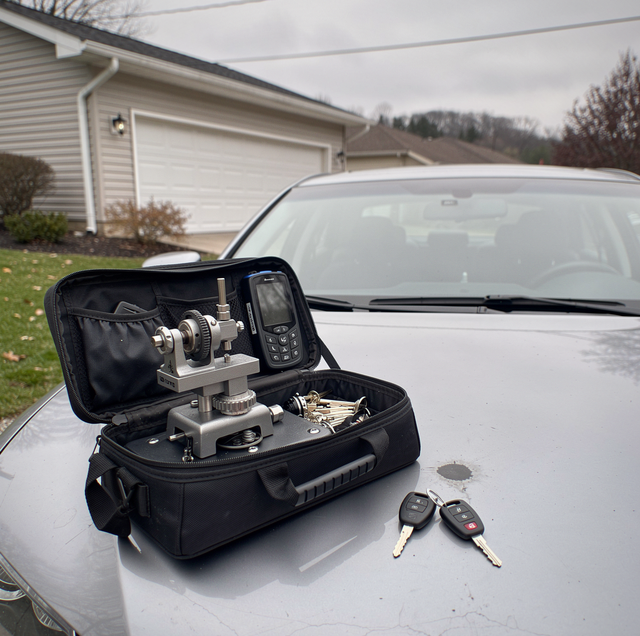
Losing your only car key feels a lot bigger than misplacing a house key. Suddenly your vehicle is stuck wherever it sits, your schedule is on hold, and you are left wondering whether the key is truly gone or just buried under a seat. The good news is that a missing car key is a solvable problem, and the steps you take in the first hour matter more than you might think. Working through the situation in order, rather than jumping straight to worry, gets you back on the road faster and with fewer surprises along the way.
Confirm It Is Actually Lost, Not Misplaced
Before treating this as a full loss, spend fifteen minutes ruling out the easy explanations. Retrace your last few stops: the last store, the last coat pocket, the last bag you carried. Check under car seats, in seat cushions, inside gym bags, and along the bottom of purses or backpacks, since a small fob slides into gaps far more easily than most people expect. If you were at a restaurant, gas station, or gym, a quick call to their lost and found can save you the entire process below.
It also helps to think about when you last definitely had the key in hand. If you remember using it to lock the car this morning but cannot picture touching it since, that narrows the search dramatically. If you have already checked your home, your vehicle, your usual pockets, and any places you visited in between, and there is still no sign of it, it is reasonable to proceed as if the key is gone for good. Waiting too long to accept that only delays getting a working replacement in hand.
Secure the Vehicle While You Sort Things Out
Once you have concluded the key is truly missing, shift your attention to the vehicle itself rather than continuing to search. A lost key on its own is inconvenient, but a lost key that falls into the wrong hands, paired with a car left open or easy to access, becomes a bigger problem.
A few practical steps make sense here:
- Make sure every door, the trunk, and any hatch are locked, even if the vehicle looks untouched.
- Park in a well-lit, visible spot if you have any say in where the car sits overnight.
- Avoid leaving the vehicle registration or any documents showing your home address inside the car, since that paperwork combined with a missing key is a bigger risk than either alone.
- If your vehicle has an alarm or aftermarket security system, confirm it is still armed and functioning.
- Note the vehicle identification number (VIN), located on the dashboard near the windshield or on the driver's side door frame, since you will likely need it later.
None of this requires the missing key to be found. It simply limits what a stranger could do if they happened to find it before you get a replacement made and the old key deactivated.
Decide Whether the Old Key Needs to Be Deactivated
Most vehicles built in the last two decades use a transponder chip or a smart key that communicates with the car's computer. That matters here because it means a new key is not just a physical shape cut to match your locks. It has to be programmed to the vehicle's system to start the engine at all. This is actually good news for security: on most modern vehicles, cutting a new key and programming it also erases the old one from the system, so the missing key stops working the moment the replacement is created. Ask whoever handles the replacement whether that is the case for your specific make and model, since it affects how urgently you need to worry about the lost key being used against you.
What Information and Proof You Will Typically Need
Getting a replacement key made for a vehicle is not like getting a house key copied at a hardware counter. Because the new key must be tied to your vehicle's ignition and security system, and because a criminal with the right blank could otherwise walk up and order a key for any car, you should expect to prove the vehicle is actually yours. Have these on hand before you call anyone:
- Proof of ownership, such as your vehicle registration or title.
- A valid photo ID that matches the name on the registration.
- The VIN, if it is not already legible from the registration.
- The make, model, and year of the vehicle.
- Proof of insurance, which some providers ask for as an extra confirmation.
If the vehicle is registered to someone else, such as a family member, a leasing company, or an employer, bring documentation showing you are an authorized driver, or have the registered owner present. Being ready with this paperwork before help arrives is one of the biggest time-savers in the entire process, since a technician cannot cut and program a key without some way to confirm the vehicle belongs to you.
Locksmith vs. Dealership: Comparing Your Options
Once you have your documents together, you have two main paths to a working key, and they differ mostly in speed and convenience.
A dealership can order and program a factory-matched key, but this typically means scheduling an appointment, waiting for a part to arrive if it is not in stock, and working around the service department's hours. Depending on the model and how busy the shop is, that can mean days without a working key, particularly for less common vehicles or older models with keys no longer in stock.
A mobile locksmith with the right cutting and programming equipment can often come to wherever your vehicle is, whether at home, at work, or on the side of the road, and cut and program a new key on the spot. There is no need to have the car towed anywhere, nor to wait for a part to ship from a distant warehouse. For most makes and models, a technician equipped for automotive work carries the blanks and the programming tools needed to handle the job during a single visit.
Here is a simple side-by-side view of what each option generally involves:
| Factor | Dealership | Mobile Locksmith |
|---|---|---|
| Location | Vehicle must go to the dealership | Technician comes to the vehicle |
| Timeline | Often days, depending on parts and scheduling | Often same day |
| Appointment | Scheduled service visit required | Flexible, on-demand |
| Towing needed | Sometimes, if the car cannot be driven | Rarely |
Neither option is wrong, and there are situations where a dealership makes sense, such as a very new model with a proprietary key system the manufacturer wants handled in-house. For most everyday situations, though, a technician who can meet you where the car is parked removes the biggest headache: getting a vehicle without a key to wherever a new one can be made.
What Happens During On-Site Key Cutting and Programming
If you go the mobile route, the process is simpler than it sounds. A technician arrives with blank keys and the equipment needed to program a chip or smart key to your vehicle's onboard computer. After confirming ownership with the documents mentioned earlier, they identify the exact key type your vehicle needs, since a sedan, an SUV, and a truck from the same manufacturer do not always share the same key hardware.
The physical key gets cut to match your ignition and door locks, and the chip inside is then paired to your vehicle through a programming sequence specific to that make and model. Once programming is complete, the technician typically tests the key in the ignition and on the doors before leaving, confirming the vehicle starts and locks properly. As mentioned earlier, this process commonly clears the lost key from the system at the same time, so you are not left wondering whether a second, unaccounted-for key is still active.
Reduce the Odds of This Happening Again
Once you are back on the road, it is worth taking a few minutes to lower the chances of a repeat. Consider having a spare key made and stored separately from the vehicle, such as at home or with a trusted family member, rather than carrying it with your main key. A dedicated hook by the door, rather than a pocket or the bottom of a bag, cuts down on keys quietly working their way out of reach. If your key is a battery-powered fob, keep an eye on its condition too, since a fading fob sometimes gets tossed aside or forgotten precisely because it stops feeling reliable.
Losing a key is often less about carelessness and more about a key having no fixed home. Giving it one is a small habit that pays off the next time your bag gets dropped, your coat gets swapped, or your day gets hectic.
Frequently Asked Questions
Give it a focused 15 to 30 minutes, covering your most recent stops, your pockets, your bags, and the interior of the vehicle itself. If a quick call to any place you visited turns up nothing and the key is not in any of your usual spots, it is reasonable to treat it as gone and start the replacement process rather than continuing an open-ended search.
Yes, in almost every case. Because a new key has to be programmed to start your specific vehicle, whoever makes it needs a way to confirm the car is actually yours. Expect to show your registration or title along with a matching photo ID, and keep the VIN handy in case it is requested.
On most vehicles built in the last couple of decades, yes. Cutting and programming a replacement key typically re-syncs the vehicle's onboard system, which commonly erases the lost key at the same time. It is still worth confirming this directly for your specific make and model, since the exact behavior can vary.
A mobile locksmith is usually faster because the technician comes to your vehicle, rather than requiring you to bring it to a service counter and wait for a scheduled slot. A dealership can still be the right call for certain newer or specialty models, but expect a longer timeline in most everyday cases.
Make sure it is locked, parked somewhere visible, and free of documents showing your home address. If the vehicle has an alarm, confirm it is armed. These steps limit what anyone could do with the vehicle even if the lost key later turns up in the wrong hands.
Most makes and models can be handled, though the exact process and equipment needed depends on the age and type of key system the vehicle uses. Older vehicles with simple metal keys are often quicker, while vehicles with more advanced smart-key systems may take a bit more time to program correctly. A technician can typically tell you what to expect once they know your vehicle's year, make, and model.
Get a replacement car key cut and programmed on-site — Skip the dealership wait and get back on the road the same day. Lock Star Locksmith serves Pittsburgh, Bethel Park, and Penn Hills. Call (412) 376-6706.
