
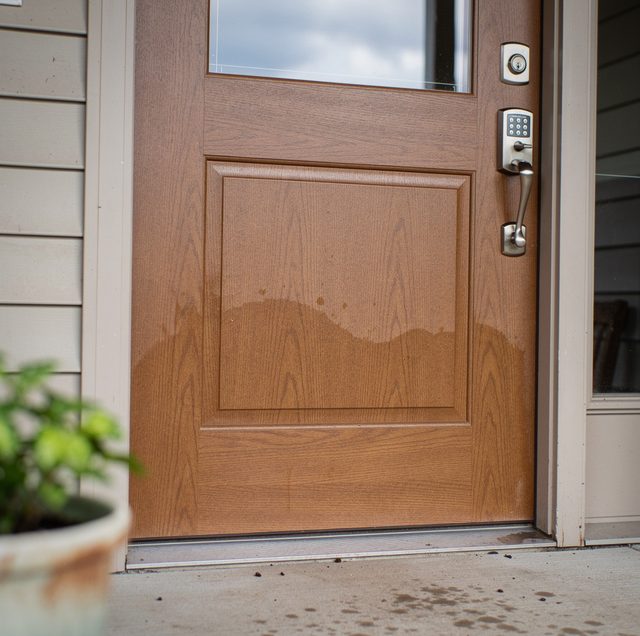
A front door lock only works as well as the key that opens it, and a metal key has a habit of ending up in the wrong hands. Someone borrows it once and gets a copy made without asking. Someone loses a purse or a jacket with a house key clipped inside. A spare gets left under a mat or a rock, and eventually the wrong person figures out where to look. None of that requires a skilled break-in. It just requires an ordinary key to do what ordinary keys have always done: being easy to copy, easy to lose, and impossible to track once it leaves your hand.
Keyless entry changes what's controlling access to your door. Instead of a piece of cut metal that anyone can duplicate at a hardware counter, the door responds to a code, a signal, or a credential that you control and can change whenever you want. That shift is the core of why keyless systems tend to close security gaps that traditional locks can't.
How Keyless Entry Systems Actually Work
Keyless entry encompasses a handful of mechanisms, and it helps to know how each one works before deciding whether it fits your house.
A keypad lock replaces the keyway with a set of numbered buttons on the outside of the door. You enter a code, and an internal motor or solenoid retracts the bolt. Some keypads run on standalone batteries with no connection to anything else, while others are wired into a broader system. Because the code is stored electronically, it can be changed as often as you like without touching the hardware itself.
A smart lock adds wireless connectivity to the same basic idea. Most smart locks pair with a phone app over Bluetooth or Wi-Fi, letting you lock and open the door remotely, see a log of who came and went, and issue codes to specific people. Many smart locks also retain a physical keyway as a backup, so the deadbolt hardware beneath is often similar to that of a standard lock, with an electronic brain layered on top.
A fob or key card system uses a small transmitter or a card with an embedded chip instead of a code you type. Holding the fob near a reader, or tapping the card against it, sends a signal that releases the bolt. This approach is common in rental properties and buildings with multiple units, since a lost fob can be deactivated instantly without rekeying every door on the property.
All three approaches share one trait that matters more than the mechanism itself: the credential that opens the door, whether it's a code, a phone signal, or a fob, can be revoked and reissued without any physical change to the lock.
Why That Makes a Real Security Difference
No Lost or Copied Keys Sitting Out There
A traditional key is a physical object, and physical objects get lost, borrowed, and duplicated in ways you often don't find out about until much later. A contractor keeps a copy after a job wraps up. A house sitter's key ends up on a misplaced keyring. A key is copied at a hardware counter without a second thought, and there's no record of it. With a keyless system, the credential itself is what opens the door, so there's nothing to duplicate at a counter and nothing sitting in a stranger's pocket months after you expected it back.
Codes and Credentials Change on Demand
Rekeying a traditional lock after a lost key, a breakup, or a contractor who never returned a copy means calling a locksmith to swap the pins inside the cylinder. With a keyless system, changing who has access is often just a few taps. Delete a code, deactivate a fob, or remove a phone credential, and any key associated with that person stops working immediately. You're not waiting for a technician to physically alter the lock every time your circle of trusted people shifts.
Access Logs Show Who Came and Went
Many smart locks and keypad systems keep a running log of every time the door opens, linked to the code or credential used. That log turns a vague question, like whether the dog walker actually showed up, into something you can check directly. It also means that if something does go wrong, you have a record to hand a locksmith or an investigator instead of guessing at when and how someone got in.
Temporary Codes for Guests and Service Visits
Instead of hiding a spare key outside for a cleaner, a repair technician, or a guest arriving while you're still at work, a keyless system lets you issue a code that only works for a set window of time. Once that window closes, the code stops working on its own, with no key to collect and no lock to worry about afterward. That's a meaningfully different situation than a spare key that keeps working indefinitely until someone remembers to take it back.
No More Hidden Key Under the Mat
The hidden spare key is one of the most common and most predictable security gaps in a home. People tend to choose obvious spots, a mat, a planter, a fake rock, and those spots are obvious to anyone who's paying attention, including someone casing a property rather than just a friend who needs to let themselves in. A keyless system removes the need for that hiding spot altogether, since access can be granted via a code or credential rather than a physical key left outside the door.
Addressing the Common Concerns
Keyless entry raises a few reasonable questions, and it's worth answering them directly rather than glossing over them.
What Happens When the Power Goes Out or the Battery Dies
Most keypad and smart locks run on standard household batteries, not household electricity, so a power outage in the neighborhood doesn't disable the lock. The batteries themselves typically last many months under normal use, and nearly every system gives a low-battery warning well before it stops working, either through a light on the keypad or a notification on your phone. Many models also include an external contact point where a backup battery pack can be pressed against the outside of the lock to provide enough charge for one entry if the internal batteries run all the way down.
Whether Keyless Locks Can Be Hacked
This is the concern that comes up most often, and it deserves a straight answer rather than dismissal or alarm. Wireless keyless systems do carry some digital attack surface, just like any connected device, but the practical risk to a residential lock is smaller than most people assume. Reputable smart locks use encrypted communication between the lock and the app, and the physical bolt mechanism underneath is often the same hardware used in traditional deadbolts, meaning it resists prying and forcing just as well. In practice, far more break-ins happen through a door left open, a weak strike plate, or a hidden spare key than through anyone remotely defeating a lock's electronics. Choosing a system from an established manufacturer, keeping its firmware updated when that's an option, and using a code that isn't easy to guess address most of the realistic risk.
Keeping a Physical Backup Entry Method
Nearly every keypad and smart lock on the market includes some form of manual override, whether that's a traditional key cylinder built into the same unit or a mechanical bypass for emergencies. That backup matters in the rare situations where batteries fail unexpectedly, an app won't connect, or a code is forgotten at an inconvenient moment. Choosing a system with a reliable manual option, rather than one that depends entirely on electronics with no fallback, keeps you from ever being fully locked out of your own home.
What to Consider When Choosing a Keyless System
Not every keyless lock fits every door, and a little planning up front avoids a mismatch later.
Compatibility With Your Existing Door and Hardware
Deadbolt locks come in a range of sizes and backset measurements, and not every keyless model fits every door without modification. Some systems are built to replace an existing deadbolt directly, using the same holes and hardware, while others require a different door prep entirely. Checking the specifications of your current hardware against a system's requirements before buying prevents a return trip to the store or an install that doesn't quite line up.
How You Want to Manage Access Day to Day
Some households want a simple keypad that a few family members use, with a single shared code. Others want individual codes for each person, remote locking from a phone, or integration with a broader smart home setup that includes cameras or an alarm system. Deciding how much control and how many features you actually want, rather than defaulting to the most complicated option, helps narrow the field considerably.
Professional Installation Versus a Retrofit Kit
Some keyless locks are designed as simple retrofits that fit onto an existing door in place of the old hardware, while others benefit from professional installation, particularly if the door needs adjustment, the wiring for a hardwired system needs to be run, or the setup is part of a larger access control project for a rental property or a home with multiple entry points. A technician can also confirm the door itself is solid enough to support the new hardware properly, since a lock is only as strong as the door and frame around it.
Frequently Asked Questions
In most everyday scenarios, yes, because the biggest security gaps with traditional keys stem from copying, loss, and hidden spares rather than the lock's physical strength. A keyless system closes those specific gaps while typically using bolt hardware that's just as resistant to physical force as a standard deadbolt.
A short or repeated code is easier to guess than a longer, less obvious one, so choosing a code that isn't a birthday or a repeated digit meaningfully reduces that risk. Many systems also lock out further attempts, or add a delay, after several incorrect entries in a row, which limits how much guessing anyone can realistically do.
Many smart locks offer an auto-lock feature that engages the bolt after a set number of minutes, eliminating the human error of walking away from a door that wasn't locked. Some systems can also send a notification if the door has gone longer than expected without being secured.
Yes, a keyless deadbolt typically operates independently of whatever knob or handle is installed below it, so the two can coexist on the same door without interfering with each other. Many households keep the existing knob as a secondary latch while relying on the keyless deadbolt as the main lock.
Most keypad and smart deadbolts include a traditional key cylinder in the same unit, so a physical key backup is still an option, even though the primary access method is electronic. Even so, the security advantage of a keyless system comes largely from relying on codes and credentials rather than handing out physical keys, so it's worth thinking through who really needs a hard key copy.
A well-made traditional deadbolt provides solid physical security on its own, so the decision to upgrade often comes down to convenience and access control rather than the bolt's strength. If you find yourself dealing with lost keys, hidden spares, or frequent turnover in who needs access, a keyless system solves problems a traditional lock simply isn't built to address.
Have a keyless entry system installed or evaluated — a technician can confirm your door hardware is compatible and set up access the way you actually want to use it. Lock Star Locksmith serves Pittsburgh, Bethel Park, Penn Hills. Call (412) 376-6706.
