
What a Locksmith Checks in a Home Security Review
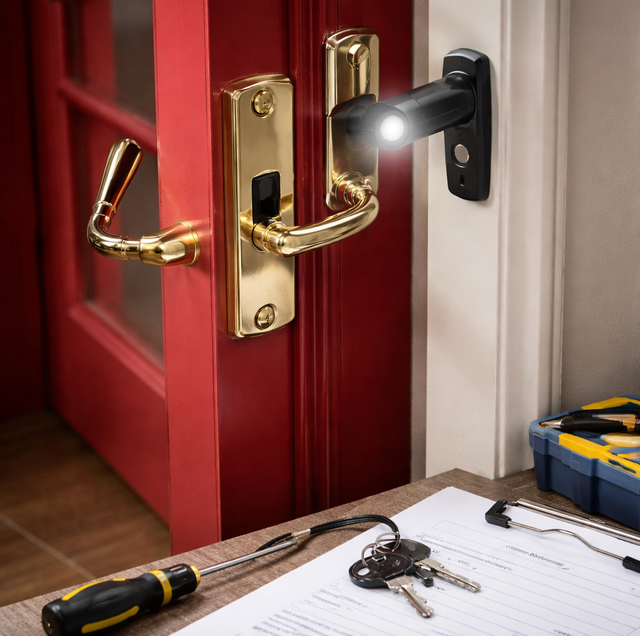
Quick Answer: A home security review is a room-by-room inspection of every entry point and lock. A locksmith checks the grade and condition of your deadbolts and door hardware, how strike plates are anchored, whether doors and frames can resist force, and whether locks should be rekeyed. The review also covers sliding-door and window locks, garage and secondary doors, smart-lock options, key control, and outdoor visibility. The goal is to find weak spots and rank them, so you fix what matters first.
Most break-ins are not clever. They rely on a door that looks solid but gives way under a single kick, a spare key still hanging where the last owner left it, or a back window nobody thought to lock. A home security review is a walk-through built to find those quiet failures before someone else does. A locksmith moves door to door, testing hardware, checking how locks are anchored into the structure, and asking who has copies of your keys.
Why a Security Review Is Worth Doing
Locks age quietly. The deadbolt that felt reassuring when you moved in may have loosened, worn, or been keyed to a hardware-store blank that dozens of copies already exist for. You rarely notice until something goes wrong. A review is the difference between assuming your home is secure and knowing which specific points would fail first.
A useful comparison: a home inspection before you buy tells you what is behind the walls and under the roof so nothing surprises you later. A security review does the same for how your home keeps people out. It surfaces the weak link, because a burglar only needs one, and it lets you spend on the door that actually matters instead of the one that already holds.
The review is also about matching security to how you live. A family that hands a key to a dog walker, a cleaner, and two teenagers has a different key-control problem than a single occupant who never lends a copy. A locksmith reads the whole picture, not just the lock in front of them.
The Front Door and Main Entry Hardware
The front door carries the most weight in any review, because it is both the most-used entry and the one visitors judge from the curb.
Deadbolt Grade and Condition: Locks carry a grade set by an industry testing standard, running from Grade 3 (basic residential) up to Grade 1 (the toughest residential rating). A locksmith checks what grade you have and whether the bolt still throws fully and smoothly. A deadbolt should extend a full inch into the frame; a bolt that only partly throws, or one you have to lift the door to engage, is doing a fraction of its job. Worn internal parts, a loose cylinder, or a bolt that sticks all get flagged.
The Strike Plate and Screw Length: This is the single most overlooked point in most homes. The strike plate is the metal piece the bolt lands in, and it is only as strong as what holds it. Many doors ship with a plate fastened by short three-quarter-inch screws that bite into the doorjamb trim and nothing more. A locksmith looks for a reinforced strike plate anchored with three-inch screws that reach past the jamb into the wall framing behind it. That one change is often the biggest gain a door can get, because it moves the point of failure from soft trim to structural wood.
Door and Frame Integrity: A strong lock in a weak door is a strong lock going nowhere. The review checks the door material and thickness, whether a hollow-core door is standing in for an exterior door, the condition of the frame and jamb, and the size of the gap between door and frame. A wide gap gives a pry bar room to work; split or rotted wood around the strike gives way under force. Hinges get a look too, since exposed hinge pins on an out-swinging door are a bypass point a locksmith can address with fixed or set-screw pins.
Whether Your Locks Should Be Rekeyed
Rekeying changes the internal pins of a lock so old keys no longer work, without replacing the whole lock. A review flags when it makes sense. If you just bought the home, you have no way of knowing how many keys are out there from previous owners, agents, contractors, or their friends. Rekeying resets that to zero. The same applies after a lost or stolen key, a roommate or tenant moving out, or a breakup where a copy is unaccounted for. It is faster and lower-cost than new hardware, and a locksmith can often key several doors to a single new key so you carry one instead of four.
Secondary Doors, Sliding Doors, and Windows
Attackers gravitate to the entrances you watch least. The review gives them equal weight.
Sliding Glass Doors: Sliding doors are a common soft spot. The factory latch is often a light catch that pops with a shove. A locksmith checks for a secondary blocking device, a bar or pin in the track that stops the panel from sliding, and looks at whether the door can be lifted out of its track entirely, which anti-lift screws in the upper channel prevent.
Window Locks: Ground-floor and basement windows get checked for working sash locks, and for whether double-hung windows have a vent stop or pin that lets them open a few inches for air while still resisting being forced wide. Windows near a deck, low roof, or fence line get extra attention, since those give an easy step up to an opening.
Garage and Other Entries: The door from an attached garage into the house is an interior-grade door in many homes, yet it opens into your living space and often sits hidden from the street once the garage is closed. A locksmith treats it as a real exterior door and checks it for a proper deadbolt. The overhead garage door, side gates, basement hatches, and pet doors large enough to reach through all get noted.
Smart Locks, Keypads, and Key Control
Electronic hardware is a fair option when it fits how you live, and a review lays out the trade-offs honestly instead of selling the shiniest box.
Keypad and Smart Lock Pros and Cons: A keypad or smart lock removes the physical spare-key problem, lets you give a delivery or a guest a code you can delete later, and can log who came and went. The costs are real too: batteries die and need a plan for backup entry, codes get shared and should be rotated, and any connected device depends on the network and app behind it. A locksmith helps you weigh a keyed deadbolt, a keypad, or a model that keeps a physical key as backup, based on who uses the door and how often.
Key Control: Key control is simply knowing who holds a copy of your key, and it is where many homes quietly lose ground. Every lent, copied, and never-returned key is a door still open in a small way. The review counts the copies you know about, raises the ones you may have forgotten, and points to options like restricted keys that a hardware kiosk cannot duplicate without authorization.
Lighting and Visibility Basics
Locks resist force; light removes the cover that force needs. The review steps outside to look at approach paths. Dark entryways, side doors screened by tall shrubs, and unlit walkways all give someone room to work unseen. A locksmith notes where motion-sensor lighting, trimmed sightlines, or a clearer view from the street would take away the concealment an intruder counts on. None of this replaces good hardware, but it changes the odds before anyone reaches the door.
Frequently Asked Questions
For an average single-family home, plan on roughly 45 minutes to about 90 minutes. A locksmith walks every exterior door, tests each lock by hand, checks window and sliding-door hardware, and steps outside for the lighting and sightline pass. Larger homes, multi-unit properties, or houses with many secondary entries run longer. You end with a ranked list of findings rather than a sales pitch, so you can decide what to address now and what can wait.
No. A security review is non-invasive. The locksmith operates each lock the way you would, checks the throw and fit, and inspects mounting hardware and screws visually. Nothing is drilled, taken apart, or forced. The only tools in play are a screwdriver to confirm screw length in a strike plate or hinge and a tape measure for door gaps and bolt throw. Any actual repair or upgrade happens later, only with your approval.
Bumping is one method that targets standard pin-tumbler cylinders, and some older builder-grade locks are more vulnerable to it than newer ones. You do not need to know the technique, only that hardware rated for higher security uses features like specially machined pins or a sidebar to resist it. Ask the locksmith whether your cylinders carry that kind of resistance; if a door protects a main entry and the cylinder is basic, upgrading the cylinder alone is often enough without replacing the whole lock.
Often, yes, through a process called keying alike. A locksmith rekeys the cylinders on your exterior doors to the same key, so one key opens the front, back, garage, and side doors. It is popular after a move because it fixes key control and convenience at once. If you want tiered access, keying can also be set so one key opens everything while another opens only certain doors, useful for a cleaner or a rental unit within the property.
Every three to five years is a reasonable baseline for a home where nothing has changed, since hardware wears and standards move. Do one sooner after specific triggers: buying the home, a break-in on your street, a lost key set, a change in who lives there, or a renovation that added or moved a door. Insurance carriers sometimes ask about deadbolt grade or entry hardware, and a review gives you a clear record of what you have.
It can, though it varies by carrier and policy. Some insurers offer a small premium consideration for certified deadbolts, monitored entry systems, or security hardware on record, and many ask about your locks when you apply. Keep any receipts and note the grade of hardware installed. Before assuming a discount, call your agent and ask which specific features they credit, so any upgrade you choose lines up with what your policy actually recognizes.
Book a walk-through and find your weak points before someone else does — a clear, no-pressure plan to secure every entry. Lock Star Locksmith serves Pittsburgh, Bethel Park, Penn Hills. Call (412) 376-6706.
