
What Is a Transponder Key, and Why Is It Harder to Replace?
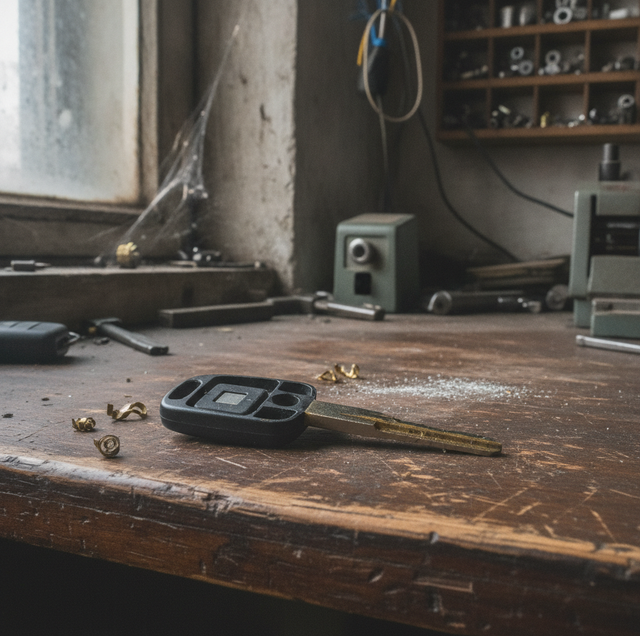
Quick Answer: A transponder key has a tiny microchip embedded in its plastic head. When you start the car, the vehicle's immobilizer sends a radio signal; the chip responds with a unique code, and the engine fires only if that code matches what the car expects. Replacing one takes more than cutting a blade, because the new key also has to be electronically programmed to your specific car.
If you look closely at the head of a modern car key, or think about why a hardware-store copy never quite worked, you're running into the same piece of technology. Somewhere in the mid-1990s, carmakers started building a small electronic gatekeeper into the key itself. That gatekeeper is why you can't just grind a matching blade and drive off, and why replacing a lost key is a bigger job than it used to be. Understanding what's happening inside the key head explains the whole thing.
What a Transponder Key Actually Is
The word "transponder" is a blend of "transmit" and "respond," and that describes exactly what the chip does. Sealed inside the key's plastic head is a small microchip, usually paired with a tiny coil of wire that serves as an antenna. There's no battery in a basic transponder chip. It sits dormant until the car wakes it up.
When you slide the key into the ignition and turn it, a ring-shaped antenna around the ignition cylinder broadcasts a short-range radio signal. That signal does two things at once: it powers the chip via the coil and asks it to identify itself. The chip answers back with a unique code. The car's computer checks that code against the list of keys it has been told to trust. If the code matches, the engine control unit is allowed to fire the injectors and start the car. If it doesn't match, the car stays put no matter how well the blade is cut.
That whole exchange happens in a fraction of a second, every single time you start the vehicle. You never see it, which is part of the point.
The Immobilizer: The Anti-Theft System Behind It
The system that runs that handshake is called an immobilizer, and it's an anti-theft feature that became standard equipment across most of the industry during the second half of the 1990s. Before it existed, a car thief who could copy or pick the ignition, or bypass it with a screwdriver and some wire, could drive the car away. A cut key or a hot-wire was enough because the ignition was purely mechanical.
The immobilizer changed that math. It adds an electronic layer on top of the mechanical one. Even if someone defeats the lock cylinder, the engine will not run unless a recognized chip is present to answer the challenge. This is why a blade-only copy is useless for starting the car. The copy will slide into the ignition and physically turn, because the mechanical cuts are correct, but there's no chip broadcasting an approved code, so the immobilizer keeps the engine locked out. Many drivers discover this the hard way after paying for a cheap duplicate that opens the doors and trunk but won't crank the motor.
Think of the immobilizer like a bouncer who checks a wristband, not a face. The lock cylinder is the front door, and the right-shaped key gets you through it. But the bouncer inside still wants to see the electronic wristband, and only the chip programmed to that car is wearing one. A look-alike walks up to the door just fine, only to be stopped cold at the second check.
Why Replacing One Is More Involved
An old-fashioned metal key was a one-step job. A locksmith read the cuts, ground a matching blade, and you were done. A transponder key is a two-step process, and both steps must succeed for the key to work.
The first step is still mechanical. The new key has to be cut so the blade matches your ignition and door locks. This can be done by decoding the lock, by cutting to the key code on file for the vehicle, or by duplicating an existing working blade.
The second step is electronic, and it's the one that trips people up. The freshly cut key carries a blank or unprogrammed chip. Before the car will accept it, the chip has to be programmed into the immobilizer using diagnostic equipment that communicates with the vehicle's computer and adds the new code to the list of trusted keys. Without that programming step, you're holding a key that turns the ignition and does nothing else.
How involved the programming is depends heavily on the make, model, and year. Different manufacturers use different security protocols, and some newer vehicles guard the immobilizer far more tightly than older ones. The number of key "slots" the car will accept varies, too, and some systems require the tool to sit through a built-in security time-out before they'll write a new key. None of that is guesswork you want to do in a parking lot with the wrong equipment.
The Hardest Case: All Keys Lost
There's a meaningful difference between making a spare when you still have a working key and making a key when you have none. The industry calls the second situation "all keys lost," and it's the toughest scenario in this whole category.
When you have a working key, the car already trusts something, and adding another key is comparatively quick. When every key is gone, there's nothing for the system to trust, so the new key has to be created from scratch, a process called origination. The locksmith or dealer has to pull the key code to cut the blade, then reach the immobilizer to write the first trusted chip, with no existing key to lean on. On many vehicles, this also triggers the security time-out mentioned earlier, a deliberate delay of anywhere from several minutes to the better part of an hour, during which the car refuses to cooperate until it accepts new programming. That waiting period is an anti-theft feature working as designed, and there's no shortcut around it.
The Three Types You'll Run Into
Not every chipped key looks the same, and the type you have changes what a replacement involves.
- Basic transponder key The chip lives in the head of an otherwise ordinary cut key. You physically insert it and turn it to start the car. There are no buttons on the key itself, and locking the doors is handled by a separate remote or by the door lock.
- Remote head key (or flip key) This combines the cut blade and chip with a set of buttons for locking and releasing the doors, and often a panic or trunk-release function. On a flip key, the blade folds into the fob body and springs out at the press of a button. Because it carries remote functions, replacing it means programming both the immobilizer chip and the remote.
- Proximity or smart key This is the keyless fob that stays in your pocket. The car senses it nearby, lets you open the door by touching the handle, and starts with a push button instead of a twist. A smart key adds the most to the program, since the remote functions, the push-button start, and the immobilizer credential all have to be set up correctly for the car to recognize it.
Dealer or Mobile Locksmith
For years, a lost transponder key meant a tow to the dealership and a wait. That's still one route, and for a handful of very tightly locked late-model vehicles, it may be the only one. But it isn't the only option for most cars anymore.
An automotive locksmith who invests in the right key machines and programming tools can handle both halves of the job, cutting the blade and programming the chip, and a mobile locksmith can often do it wherever your car is sitting, rather than making you arrange a tow. The car has to be present either way, because the programming tool physically connects to the vehicle. The advantage of the mobile route is mostly about time and hassle: the work comes to your driveway or the parking lot instead of you coordinating a tow to a service department and waiting for a slot.
The Cheapest Insurance: Keep a Spare
The single best thing you can do about all of this is boring and easy to put off. Keep a working spare key.
Because adding a key when the car already trusts one is far quicker and simpler than an all-keys-lost origination, having a spare tucked away at home turns a potential worst-case scenario into a routine duplicate. The time to make that spare is now, while your current key still works, not after it's lost or snapped off in the ignition. A little forethought here saves you the slowest, most involved version of the job later.
Frequently Asked Questions
Three quick signals point to it. First, look at the head of the key: a transponder key has a thicker plastic head because the chip and antenna coil are molded inside it, whereas a pure mechanical key is often all-metal or has a thin plastic bow. Second, consider the car's age. If your vehicle is a model from the late 1990s or newer, it almost certainly has an immobilizer and a chipped key. Third, the telltale symptom: if a copied key opens the doors but the engine turns over and immediately dies, or won't crank at all, you're dealing with an unprogrammed transponder.
A hardware store can usually cut the blade, but cutting is only half the job, and most kiosks can't do the other half. Programming the chip requires a diagnostic tool that connects to your car's computer and a blank key with the correct chip type for your make and model. A shop without that tool can hand you a key that fits the ignition and still won't start the car. Automotive locksmiths who specialize in this carry both the programming equipment and a stock of the right blanks, which is why they can complete a working key when a general key-cutting counter can't.
Because starting the car depends on the immobilizer handshake, not the blade. When you turn the key, the car sends a radio challenge and waits for the chip to answer with an approved code. A blade cut to match your locks will turn the cylinder, but if its chip was never programmed to your car, or it has no chip at all, the immobilizer never gets the answer it wants and refuses to let the engine run. The mechanical fit and the electronic credential are two separate checks, and a cut-only copy passes the first while failing the second.
They are points along a scale of added electronics. A basic transponder key is just a cut blade with a chip inside, no buttons, and you insert and turn it. A remote head key adds lock, entry, and often panic or trunk buttons to that same cut-and-chip key, so it does everything a basic key does plus remote entry. A smart or proximity key removes the need to insert anything at all: it stays in your pocket, opens the door when you touch the handle, and starts the car with a push button. Each step up adds more functions that have to be programmed when you replace it.
Yes on both counts, and for good reason. The car has to be there because the programming tool connects directly to the vehicle to write the new key into the immobilizer, so there's no way to do half of the job remotely. Proof of ownership matters because a transponder key is, in effect, permission to drive the car away. A reputable locksmith or dealer will ask for identification and documentation showing the vehicle is yours before creating a key, precisely because the whole system exists to stop the wrong person from starting your car.
Sometimes, but it depends entirely on the vehicle. A number of older cars include an onboard programming procedure that lets an owner add a key using two keys that already work, following a sequence of ignition cycles and button presses spelled out in the owner's manual. The catch is that many of those procedures require two working keys to begin, which doesn't help if you're down to one or zero. And a large share of newer vehicles have closed that door, requiring a dedicated programming tool and, in some cases, secure access that only equipped dealers and locksmiths can reach. If your car supports the two-key onboard method and you have the keys for it, it's worth trying; otherwise, it's a job for someone with the right equipment.
Book a mobile transponder or smart-key job — get a working key or spare made for your car without a tow. Lock Star Locksmith serves Pittsburgh, Bethel Park, and Penn Hills. Call (412) 376-6706.
