
Why Rental Properties Should Be Rekeyed Between Tenants
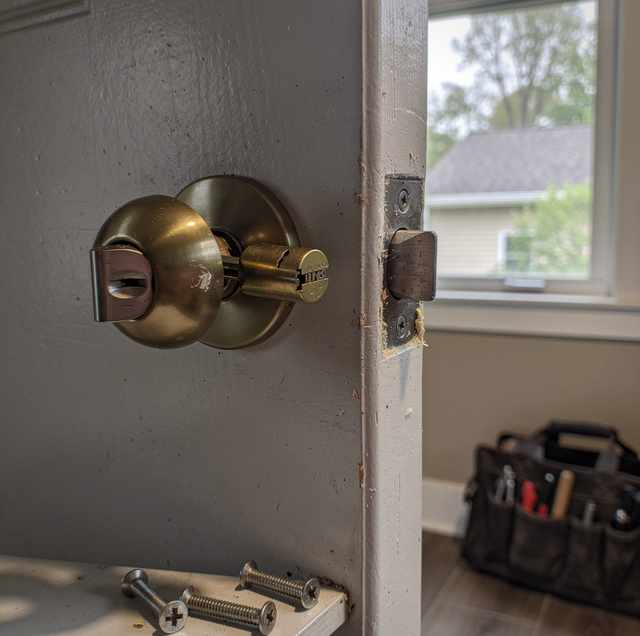
A lock has no idea who is supposed to be holding its key. It only knows the shape of the metal that turns it, and that shape does not change on its own when a lease ends. Every copy cut during a tenancy- the tenant's own, a partner's, one made for a dog-sitter- still opens that door until the cylinder itself changes.
That gap matters most at a rental you own. A move-out leaves a departed tenant's key equally live at the front door, the interior doors it also fits, and any shed on the same ring, until you change the cylinder. A commercial suite works the same way: a former employee's copy and a contractor's copy continue to function long after the person is gone.
A Lock Does Not Know Who Used to Live There
A cylinder inside a deadbolt is a small stack of pins cut to match one pattern. It has no memory of who was living behind the door last month, and no way to tell a former resident's key from a current one. The only thing that changes what a key can open is a locksmith swapping the pins to a new pattern.
That gap between what a lock actually knows and what a property owner knows is where most untracked keys live. A tenant who lived somewhere for several years may have made a copy for a partner, a parent, or a contractor who once needed a week's access. None of those copies ever get logged anywhere, and none stop working just because the lease that justified them expired.
Turnover is the point where that gap becomes concrete, not just theoretical. A single-family home with one long-term tenant might go a decade without an uncontrolled key ever mattering. A rental that turns over every year carries the same uncertainty, which is why turnover is a common reason a rekey is scheduled.
Every Uncollected Key Stays a Working Key
This is not a guess about what a locksmith would recommend. The standard reasons a residential rekey gets scheduled are moving into a new home, the end of a rental agreement, or a lost set of keys, and a change of tenant is just the rental-agreement case by another name.
A returned key ring tells you only what came back, never what didn't. If a hidden copy was ever cut, or a set was given to a friend who watered the plants, none of that shows up at the walkthrough. You are trusting a headcount from someone with no reason to remember it accurately.
What Sags Between a Move-Out and a Rekey?
Between the day a tenant leaves and the day a lock is actually rekeyed, the address is in an odd state. The lease has ended, the deposit is being sorted out, and the unit may already be listed for a new tenant to view, yet the working keys to it are the same ones that existed the week before. A vacant unit in that window is not an empty inconvenience. It is a property that anyone holding an old key can still enter, at the exact moment nobody is watching it closely.
The length of that window is mostly a scheduling choice, not a fixed cost. Some property managers rekey the same day as the walkthrough, before a single showing happens. Others wait until a new tenant signs, which can stretch the gap to weeks if the unit sits between renters. The vacancy itself is the risk, since nobody is home to notice a key being used, so shortening that window matters more for a rental than it would for an occupied house.
What a Rekey Visit Actually Changes
A rekey does not touch the deadbolt or the door itself. A technician opens the cylinder, replaces the small pins inside with a new set cut to a new pattern, and reassembles it, all without removing the lock from the door or changing how it looks from the hallway. Every key cut to the old pattern, whether it was returned, lost, or quietly kept, stops working the moment that new pattern is set.
Ask for the exact key count before a tenant hands back the keys. A rekeyed lock should match exactly the number of copies, as there are people who need one: the tenant, a roommate if there is one, and nothing left from a contractor.
One visit typically covers every exterior door on the unit, so the front door, the back door, and the garage entry to the house end up sharing one new key set, not three separate patterns. That single-key result is usually the whole point: a tenant carries one key, not a ring of them, and every old copy anyone was holding becomes scrap metal at the same moment.
A rekey is also the only response that closes every version of an old key at once. Replacing the whole deadbolt does the same job the hard way, and simply asking for keys back does not close it at all, since a copy nobody hands back keeps working regardless of what anyone promised at the walkthrough.
Commercial Leases Raise the Same Point
The same logic covers a leased business space, not just a house or an apartment. Those are the same three triggers that apply on the residential side, just attached to a business lease instead of a house key: someone's employment ends, a key goes missing, or a lease transition moves the space to a new tenant. A retail unit or an office suite behaves like a rental home in this respect, just with more people holding keys at any one time.
The scale is the real difference, not the process. A house rekey replaces pins in a handful of doors for one departing tenant. A commercial rekey after a lease transition may need to cover a front entrance, a delivery door, and several interior offices, each a separate copy an outgoing employee may still be holding. No inspection or maintenance visit can catch a problem like that, because the lock still turns exactly as it always has for whoever holds the key.
Frequently Asked Questions
Requirements vary by lease and locality, and confirming them is a matter for you as owner. As a practical baseline, many landlords rekey between every tenant, since it is the only way to know who holds a key to your building.
Most rekeys take under an hour once a technician is on site, since the pins inside your existing cylinder are swapped rather than the hardware itself. You keep your current locks and get new keys that fit them, and the door looks the way it did before.
Yes, if the unit shares a building entry, a laundry room, or a mail area with other units. A rekey covering only your own door leaves a shared lock keyed to a departed neighbor's copy, which defeats much of the point of doing this at all.
Yes, a cylinder can be rekeyed many times, since the process only changes the small pins inside rather than the mechanism surrounding them. A well-made lock on your door can outlast several tenants, and several rekeys before it is your hardware, not your key, that finally needs replacing.
Nothing about a spare key changes just because a departed tenant left it behind. If you find one in a drawer after a move-out, treat it as a live key to your door until you rekey the cylinder, not as a lost item that stopped mattering once the lease ended and the unit came back.
The mechanics are the same cylinder, same pins, same visit, but the trigger tends to differ. If you manage a residential unit, the rekey is tied to one household leaving and another moving in. If your property is commercial, it often follows an employee termination, a lost badge, or a lease transition, and it can involve several doors at once rather than just your front door. Either way, the goal stays the same: no former key holder keeps working access.
Schedule a rekey before the next tenant moves in — a technician can cut new keys to a freshly pinned cylinder in one visit, for a rental unit or a leased commercial suite. Lock Star Locksmith serves Pittsburgh, Bethel Park, Penn Hills. Call (412) 376-6706.
